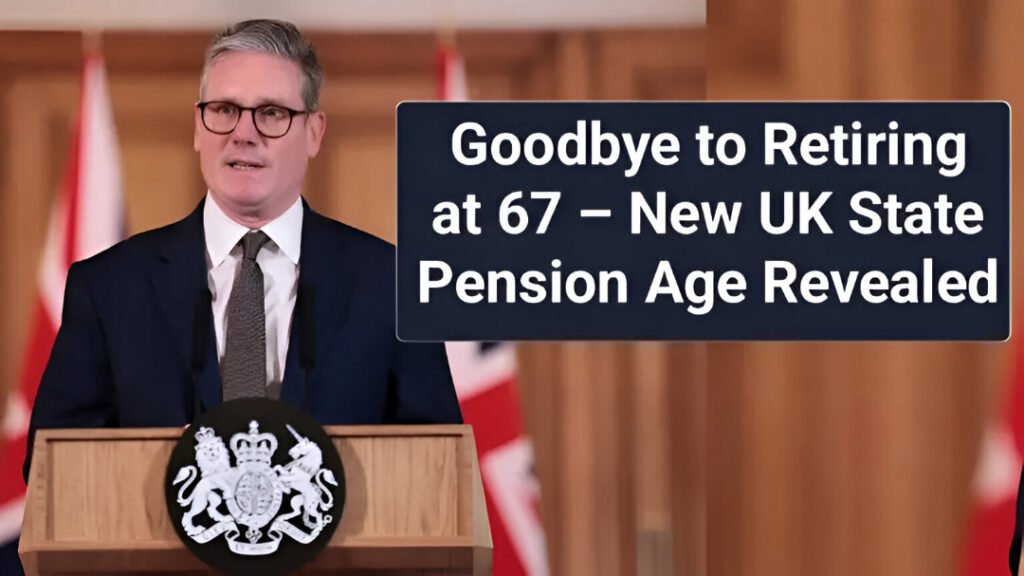
Hello Everyone, The landscape of retirement in the UK is undergoing a significant, yet expected, transformation. The government’s decision to increase the State Pension Age (SPA) is a definitive farewell to the idea of a universal retirement at 67 for many. This change is driven by a mix of shifting demographics and the necessity of ensuring the long-term sustainability of the national pension system.
This move marks a crucial moment for millions of British workers. Understanding the new timetable and its implications is vital for planning one’s financial future effectively. It requires a proactive approach to saving and a reassessment of long-held retirement expectations.
The Rationale Behind the Rise
The primary driver for raising the State Pension Age is the remarkable increase in life expectancy across the United Kingdom. People are living longer, healthier lives, which is a success story for modern medicine and society. However, a longer retirement period puts substantial financial pressure on the public purse.
Maintaining a ratio where a reasonable amount of a person’s adult life is spent contributing to the system before receiving state support is essential. The government’s goal is to balance an ageing population with the economic realities of a funded state pension.
The New Timeline for Retirement
The increase from 66 to 67 is already scheduled and is currently being phased in. However, the more impactful change is the accelerated timetable for the rise from 67 to 68 that the government has confirmed. This shift means that those currently in their 40s and younger are likely to be affected the most.
The State Pension Age will no longer be a fixed, single age for everyone. It is becoming a fluid target, adapting to birth year and economic factors. The precise age at which you can claim will now be more dependent on your date of birth than ever before.
Who Will Be Affected?
The immediate rise from 66 to 67 is taking place between 2026 and 2028, directly impacting those born on or after 6 April 1960. For this group, retirement is shifting later by up to a year. The changes to 68, however, have a more profound long-term effect.
The acceleration to age 68 will primarily affect individuals born in the 1970s and beyond. The government is committed to providing a minimum of 10 years’ notice for any changes, but the direction of travel is unmistakably towards a later retirement.
- People born before April 1970 are likely to retire at 66 or 67, with minimal impact from the newest changes.
- Those born after April 1970 are highly likely to see their State Pension Age rise to 68 sooner than originally legislated.
The Impact on Personal Finance
A later State Pension Age means that personal savings need to stretch further than previously calculated. For every year the SPA is delayed, a person must fund their retirement privately for that extra 12 months. This places an increased emphasis on private and workplace pensions.
The financial pressure can be particularly acute for those whose working life has involved physical labour. They may find it more difficult to continue working into their late sixties. Therefore, strategic financial planning is no longer optional—it is a necessity.
Rethinking Your Retirement Strategy
Workers must now proactively check their State Pension Age and adjust their retirement plans accordingly. Simply relying on the state pension to kick in at a certain age is no longer a certainty. This change forces a critical review of existing pension pots.
You should consider increasing your contributions to a workplace or personal pension. Furthermore, exploring other forms of saving, such as ISAs, can create a buffer. This helps bridge the gap between when you stop working and when you become eligible for the state pension.
Understanding the State Pension Forecast
A crucial step in planning is obtaining a State Pension forecast from the government website. This forecast provides an estimate of what you will receive and, critically, how many more qualifying National Insurance (NI) years you may need.
The requirement for a full State Pension is currently 35 qualifying years of NI contributions. Any future increase in this required number will further affect the final payout. Knowing your exact forecast allows you to make voluntary contributions if necessary to top up your years.
- Check your latest State Pension forecast on the official government website.
- Ensure your National Insurance contributions record is complete and accurate.
The Fluid Nature of the State Pension Age
The government is required by law to conduct regular reviews of the State Pension Age, typically every five years. These reviews take into account the latest data on life expectancy, economic conditions, and the cost of the state pension.
The next review will provide further clarity on the timeline for the rise to age 68. The current uncertainty surrounding the exact date for this increase makes diligent and conservative retirement planning all the more important for younger generations. Future reviews may even lead to subsequent increases beyond age 68.
Final Thoughts
The decision to accelerate the rise in the State Pension Age is a sober reminder that the cost of an ageing society must be managed. For the UK workforce, this is a clear signal: the responsibility for funding a comfortable retirement has shifted further onto the individual. While the state pension remains a vital safety net, it cannot be the sole foundation of your post-work life. Proactive saving, regular financial reviews, and an up-to-date knowledge of the new timetable are essential tools for a secure future.